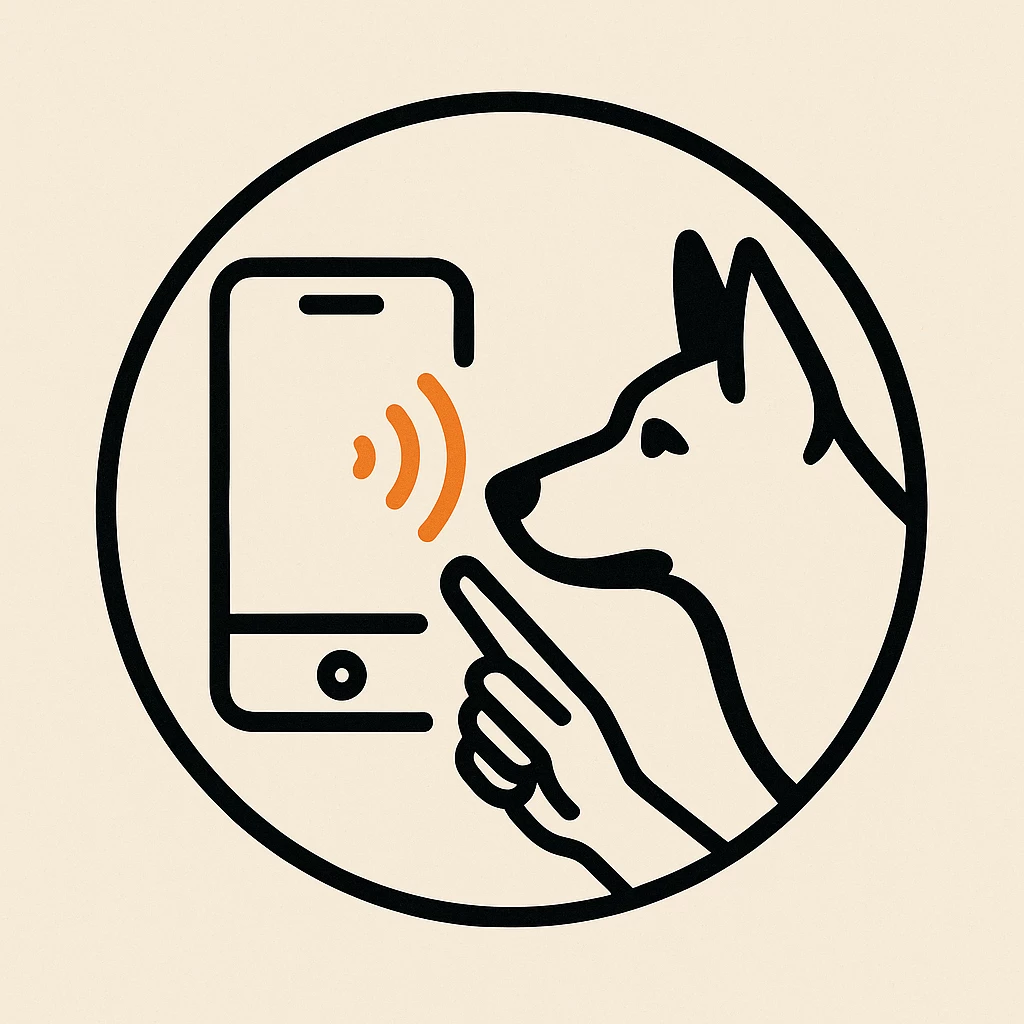
[Day 1] Mobile Devices With a Sixth Sense: What Android Can Learn From Detection Dogs
Good afternoon everyone!
Intro
Alongside my passion for Android, which I’ve also made my profession, I spend a lot of my personal time working on scent detection training with dogs. Over the years I’ve trained my own dogs to search for items such as data carriers, phones, cannabis, and most recently one on cash.
I wanted to participate in the festival because I had to skip the opportunity last year. But to contribute meaningfully, I wanted to create something that connects both worlds, Android and my other interests. This article is the result of that cross-pollination. The article is just a different perspective to discuss, a thought I had and a look in to what I think could be a good future.
Android & detection / search dogs
Enterprise mobility is still too often reduced to policies, profiles, and compliance checkboxes. A device shows compliant, an app is locked down, and the job seems done. But anyone who has worked with a well-trained detection dog knows that control is only half the story. The real value comes from analyzing behavior and context, and the ability to anticipate on what’s coming.
Fun fact: Our nose, and a dogs nose, contain olfactory receptors, nerve cells that detect odor molecules, which is what we use to recognize a scent. An average human has around 2 to 6 million of those. A dog’s nose has around 250-300 million. They are capable of detecting so much more scents than we do.
A detection dog doesn’t just smell an object. It smells the contents, the ingredients of what it’s made of and It detects deviations. It recognizes not only what is present, but also when a situation doesn’t match the pattern it expects. If something has disturbed the soil, it will recognize that. And as a handler you should be able to read to signals and act on it. If you want to go right, and the dog is showing that it recognizes a scent on the left, you should really go left and trust the signals your dog is sending you. As a dog handler I’m trusting my dog to make the right decisions, I just follow and guide the dog where needed. Lift him to higher grounds, or maybe mark areas of extra interest that I can see and I’ve been told to search. Its teamwork.
Devices as Sensors
Imagine a device that doesn’t only enforce policy but also understands what normal looks like in its environment. Not only checking whether something is allowed, but noticing when something is unexpected. A phone that has spent months connected only to Wi-Fi inside the warehouse but suddenly appears on 4G at two in the morning in another city, that may not be a direct policy violation, but it is something you and I would ask questions about. Any detection dog would pause, tilt its head, and quietly signal that something’s off.
The ingredients to make devices smarter already exist. Smartphones capture motion, location, battery patterns, network behavior, app usage, and user interaction. Individually these are datapoints, but together they form a pattern, just like scent particles form a track for example. The interesting part is: the hardware has been ready for years. What we lack is interpretation.
Fun fact: Did you know that when a dog is searching/sniffing, it can inhale and exhale up to 300 times per minute? If we would do this, we will start hyperventilating within seconds.
I think Android could evolve in the same direction by learning baselines of enterprise-normal rather than relying solely on static policies. Once a baseline exists, devices can flag changes proactively, early before things escalate.
An example
Consider a warehouse worker scanning goods along the same aisle, during the same shift, using the same three apps every day. Android sees that, learns it, and identifies it as normal. But one Monday everything is different: roaming is active, a new route is taken, unfamiliar apps are running. Instead of asking only is this allowed?, the device could ask is this unusual?, should I report this?, is this risk or intentional deviation?
As an IT admin, you could check those signals and take appropriate action. But maybe we want Android Enterprise to take their own actions up to a certain degree?
This isn’t just security, it also improves stability, efficiency and less downtime. Combine all these and you might even have an employee who is actually happy with the work IT is doing. Instead of being the team who keeps blocking things, you become the IT admin that makes the devices just work when they need to.
Closing note
I am aware of different MDM’s providing such solutions such as WS1 and Knox Asset intelligence. But I think it could and should be so much better than that. It should be part of core Android OS, present for everyone, not just the one who can afford it but also the smaller companies with less budget. It shouldn’t be depending on a third party whether or not this works.
Android Enterprise has matured. Policies are essential, but they’re not the finish line. The real opportunity lies in devices that understand normal, and detect subtle deviations before users even notice.
Maybe it’s time our Android fleets developed a sense of intuition. Maybe it's time for Android fleets to develop their own sixth sense like a detection dog that quietly sits, nose raised, because it notices something no one else does yet.