fully managed
84 Topics
Is there any way to disable Google Play Protect (GPP) from an EMM or to otherwise whitelist apps from scanning?
I am very concerned about the Enhanced GPP features coming soon that are currently being piloted in other regions. https://security.googleblog.com/2023/10/enhanced-google-play-protect-real-time.html This is not a welcome feature whatsoever for the fully managed space where we have business apps written internally that are being installed on business devices, owned by that business. In no way do we want Google sitting in between deciding whether a very legitimate app written internally for an organization should be installed on devices that are purchased and owned by the same organization on fully managed devices. I would like a way to disable GPP completely, or at a minimum whitelist applications from scanning as we don't want Google interfering in the business operations. GPP is a helpful consumer protection features but fully managed devices should have the ability to be opted in or out of the program. Otherwise GPP can incorrectly flag a mission critical app and disable or remove it from a device, thereby bringing down a line-of-business application and an end customers operations. While the intentions of GPP are good, by blocking business apps Google themselves is becoming the malicious actor that GPP is ironically trying. to prevent.Solved43KViews17likes58Comments[Day 2] Mission Intune : When Migration Becomes a Mission (Almost) Impossible
Good Morning Everyone 🕵️ Deep within the digital infrastructure, a high-stakes mission is being prepped. Five mobility experts have been deployed to solve a massive puzzle: migrating tens of thousands of smartphones to Microsoft Intune. The Goal: Ensure a fluid, secure, and uninterrupted transition for thousands of users. The Battlefront: A complex landscape filled with legacy policies, mixed configurations, and strict deadlines. It’s a race against the clock where one wrong move could start a domino effect. From scripts to security protocols—nothing is left to chance. Failure is not an option. Following Broadcom’s acquisition of VMware in 2023, the Workspace ONE product is now owned by Omnissa. Broadcom’s commercial strategy, which has influenced its spin-off companies, had become highly aggressive toward all customers. Consequently, we have decided to migrate the management of our Android and iOS tertiary fleet to Microsoft Intune.. While we are familiar with Intune, several limitations should be noted: Reporting: Intune offers basic reporting through Microsoft Endpoint Manager and Power BI integration, but lacks the advanced, customizable dashboards available in Workspace ONE. Deployment Performance: Application and configuration deployments can be slow, with status updates often delayed due to Intune’s reliance on periodic device check-ins rather than real-time communication. iOS Management: Intune provides full functionality only for devices enrolled via Apple Business Manager (ABM). Non-ABM devices have restricted supervision capabilities, limiting advanced configuration and app deployment. Error Handling: Intune does not display granular error codes in its console. Troubleshooting often requires log collection from the device or use of Microsoft Support tools, increasing diagnostic complexity. Conditional Access & Compliance: Intune integrates tightly with Azure AD for conditional access policies, which is a strength, but requires additional configuration and licensing for advanced scenarios. App Protection Policies: Strong for Microsoft 365 apps, but less flexible for third-party apps compared to Workspace ONE. Migration Strategy Overview The project aims to migrate the entire mobile fleet—a few tens of thousands Android and some iOs devices—between September 2023 and December 2024. Cybersecurity requirements mandate a shift from COBO (with personal Google accounts allowed) to COPE, reinforcing corporate control and reducing exposure to security risks. Key Challenges Technical Constraints: Devices incompatible with Android 13 require hardware replacement. For most employees, migration involves full device reset and Intune re-enrollment—a complex, time-consuming process. Security Limitations: Backup tools cannot be authorized, increasing the risk of data loss and user errors. A recurring issue is failure to remove Microsoft Authenticator configurations, creating significant support overhead. Performance Impact: The Samsung Galaxy A32, previously adequate under COBO, performs poorly under COPE, affecting user experience. Status and Strategic Decision By June 2024, progress is far below target. To mitigate operational disruption and support overload, the strategy shifts: forced migrations are discontinued. Migration now occurs only during: Hardware replacement (obsolescence, failure, or breakage) Voluntary device reset This approach prioritizes stability and resource optimization while maintaining compliance with security standards. We’ve been with Intune for almost two years, we make do with it and we are hardly surprised anymore when something doesn’t work. If you have any questions, don't hesitate to reach out via the comments below Kris335Views13likes17Comments[Day 3] Dedicated to Dedicated: Non-negotiables for EMM/MDM in Rugged Android Deployments
Disclaimer: The following article captures the opinion of Matt Dermody, Senior Director of Enterprise Mobility at Manhattan Associates. The stances contained within are a reflection of Manhattan's specific focus on line-of-business Android devices, built on years of being "Dedicated to Dedicated." Background Manhattan Associates is a B2B software company specifically focused on best-in-class, line-of-business enterprise deployments of enterprise software such as Warehouse Management (WMS), Transportation Management (TMS), and Point-of-Sale (POS). These software deployments command high expectations of uptime and availability, and that ultimately encompasses the complete solution, including the mobile computers that the software runs on. Manhattan is dedicated to ensuring that our end customers have the best possible experience, and that involves ensuring that the dedicated devices running our software are also properly maintained and supported. Google defines a "dedicated device" as a company-owned device that is fully managed and locked down for a specific work purpose, often using a single app or a small set of apps. These devices are restricted from personal use and are used for business functions like point-of-sale systems, inventory scanners, or digital signage. Or in other words, all of the device types that Manhattan sells, deploys, and supports alongside our software solutions. In that sense, I guess it can be said that we are… Dedicated to Dedicated. Managing rugged, line-of-business Android devices is not the same as managing BYOD phones and laptops. These are mission-critical endpoints running specialized apps in warehouses, stores, yards, and DCs—downtime costs money and local IT is increasingly rare. Your EMM/MDM must control versions, files, firmware, and field support with precision. Anything less adds risk and operational drag. Situation Imagine having to explain to a CIO that a business-critical mobile app has automatically upgraded to a new version that breaks functionality, and there is no easy rollback available. Here is a preview of how that might look. That situation is all too common but can be prevented with the right EMM/MDM strategies. The mere thought of that possible situation keeps the Manhattan team up at night. We have spent years developing strategies to add predictability and stability into enterprise device deployments to prevent bad situations from ever happening. Philosophies & Strategies Here is a preview of some of the core philosophies surrounding Manhattan’s tailored approach to managing mission-critical device deployments. Some of these might be controversial, but these are the strategies that work for us. 1. App Distribution and Version Discipline Rigorous version control of enterprise apps—stage, canary, bulk rollout, and rollback—is a must. Rugged ops cannot afford “surprise” app updates or version creep. If you can’t downgrade quickly, you don’t control your risk surface. An EMM/MDM should offer direct installation of private APKs on fully managed devices. Auto-upgrades to the “latest only” through Managed Google Play can lead to instability and version drift. Look for a console that can deploy specific app builds to specific groups on your schedule. If your tool can’t install an APK directly onto devices, it’s the wrong tool for rugged. Period. You must target different versions/configs by environment—Stage, QA, Prod—often per site group. That includes app versions, config files, etc. 2. File Management for App and Scanner Configuration LoB apps often externalize key settings via JSON and similar external config files. For example, Zebra DataWedge uses .db files placed in a specific auto-import directory to control mission-critical scanner settings. Your EMM must place, update, and replace these files on demand and at scale—ideally without anyone touching a device. Emergency changes (host cutover, DNS rename, scanner tweak) should be a file push away, not an onsite scramble. 3. Remote Control and Log Retrieval Treat full-fidelity Remote Control as table stakes. Support must see what the user sees, drive the screen, and pull logs and files in one session. Anything “view only” or bolt-on only erodes speed to resolution. Relying on reports from the floor or grainy pictures of an error taken from another device are not sufficient tactics for troubleshooting mission-critical device deployments. When issues hit, you don’t want an insurance policy like Remote Control that can be used to quickly diagnose and test solutions; you want a tool. An EMM admin without Remote Control is effectively blind with their hands tied behind their back. 4. OEM-level Controls (Zebra/Honeywell) There are numerous configuration settings that enterprise-grade OEMs extend beyond the baseline Android Enterprise configuration APIs. These OEMs are generally years ahead of what is available in base Android from a configurability standpoint and often introduce configuration settings that may otherwise never arrive to the base OS. These granular configuration layers ultimately are what set enterprise-class devices apart from consumer-grade technology. It is therefore imperative that an EMM managing these devices has the capability to manage OEM configuration extension features directly. For Zebra, this involves execution of their MX XML, DataWedge behavior, button mapping, radios, and other rugged-specific controls—through native profiles or integrated mechanisms. OEMConfig is useful, especially for parity across EMMs, but you will hit practical limits in closed networks and with Play-dependent timing/visibility. OEMConfig is a lowest-common-denominator functionality that was designed as a bridge to enable limited AMAPI-aligned EMMs to manage OEM-level settings with the limited tools at their disposal. Your EMM should support both OEMConfig (at a bare minimum) and offer the flexibility of direct MX/file workflows so you’re not boxed in by the limitations of distributing device settings through a complex web of Google Play server infrastructure. Your EMM should offer the ability to manage settings directly on the devices it manages, without the added layers and black boxes of complexity. 5. Firmware and Security Patching Over-the-Air (OTA) upgrades are great, but only when the EMM admin is in complete control. Auto-upgrades from the OEM pushed out over the air can bring production to a halt when critical business functions break. At a bare minimum, they can bring a network to a standstill as large upgrades are forced through the ISP connection into the building or site. An EMM should therefore offer integrations with the OEM-specific OTA and/or firmware upgrade protocols to put the controls in the admins' hands. 6. Lockdown and Kiosk Modes Rugged devices should boot into the work, not into Android. Enforce kiosk/lockdown, strict app allow-lists, settings restrictions, and consistent UX across every DC and store. The EMM should offer configurability over what is displayed on the lockdown, including personalization and customization to offer links to additional items such as launching apps, toolbars, or script executions. 7. Enrollment that Fits the Reality of Rugged Use Android Enterprise Device Owner (AEDO) with a barcode-driven process (e.g., Zebra StageNow). It’s fast, repeatable, and minimizes user taps and mis-taps on the floor. Wi-Fi credentials can be encrypted in the barcode rather than shared haphazardly and manually entered by end users into the Setup Wizard. More granular control over initial network connectivity is also afforded as compared with the limited options available through DPC extras if using the designated AEDO QR method. Avoid Zero Touch Enrollment (ZTE) for rugged Wi-Fi-only devices. ZTE is not "Zero Touch" as it realistically pushes many touches (and possible errors) to end users. There is overhead and maintenance to unenroll and re-enroll devices into the portal as they go in and out of repair. Enterprise-grade devices are often covered under repair contracts due to the nature of the environments they’re used in. This means they are going in and out of repair relatively frequently, and ZTE portal management ends up causing more bottlenecks than the steps it’s otherwise designed to free up. StageNow barcode flows are fewer steps and far more reliable for DCs and stores. 8. Closed Networks and Offline Constraints Many rugged sites have limited or no access to Google services. Your EMM must support managed app configuration and device policies in ways that don’t depend on real-time Managed Play orchestration. If your only path is Play-mediated, you’ll struggle with timing, visibility, and outcomes. Look for an EMM that offers “offline” or standalone Managed Configuration support by reading and exposing the configuration schema of an uploaded Enterprise app. 9. Health Analytics, Drift Detection, and Scripting Device health analytics (compliance, connectivity, install status) are critical for early detection and fleet stability. Pair that with a scripting engine and policy-driven rules (e.g., automatic relocation, auto-heal) to keep devices in line without manual human intervention. 10. What to Deprioritize (and Why) BYOD-centric EMMs that can’t directly install private APKs, can’t push files, and don’t include Remote Control as a first-class capability will drag deployments and support. Many EMMs specifically lack the granular APK/file control, versioning/rollback discipline, and integrated Remote Control required for rugged Android in DCs and stores; workarounds add fragility and cost without closing the gaps. Bonus – Identity and SSO Newer EMMs are offering advanced capabilities around Identity Management and SSO across business apps. As enterprise-grade devices become more multi-purpose, more mobile apps are being installed, each often with its own separate login requirements. Over time, there will be increasing needs to supply SSO workflows on-device across these business apps and to offer a clean pathway to script and automate the cleanup of a prior user’s session across all apps as they log off and make way for the next user to log in. If in the EMM selection process today, look for an EMM that offers these capabilities. Even if those features are not needed today, it is almost certainly the next set of features enterprises will look for and need to adopt. The Quick Scorecard If you can’t answer “yes” to these with your selected EMM/MDM, you’re taking unnecessary risk: Can your EMM install a specific APK build directly to AEDO devices? Can you canary a new version to one site, schedule a 2 a.m. cutover, and roll back instantly if needed? Can you push a JSON config change and a DataWedge .db to 500 devices in under 10 minutes—no manual touches? Can support remotely control the screen and pull logs/files from the same session? Can you execute Zebra MX XML, enforce kiosk/lockdown, and set scanner behavior centrally across models? Can you deploy LifeGuard/.ZIP OS updates by group, with maintenance windows and rollback? Can you enroll with StageNow barcodes (AEDO) instead of relying on ZTE flows designed for non-rugged scenarios? Can you operate cleanly in sites with limited/blocked Google services, including offline managed config workflows? Bottom Line A capable rugged EMM/MDM gives you deterministic control over versions, files, firmware, and front-line support—at fleet scale and on your schedule. Prioritize direct APK delivery, file distribution, OEM-level controls, Remote Control, AEDO barcode enrollment, and firmware orchestration. Deprioritize BYOD-first tools and any workflow that forces you through black box Play timing or pushes enrollment burden to associates on the floor. I’d love to hear what the comments have to say. Am I way off base? Do you fundamentally disagree? Or were you nodding along as you read through this. Let me know below! Oh and "AI", forgot to mention the buzzword. Matt653Views11likes7Comments
Play Protect Blocking Custom DPC Apps — How to Get Approval or Alternatives?
Hi everyone, I'm a developer who helps enterprises build custom DPC (Device Policy Controller) Reference Documentation apps to manage Android devices based on their unique requirements. Recently, Play Protect has started blocking the installation of custom DPC apps, even when these apps are signed and used internally. The warning claims the app may pose a risk due to access to sensitive data - even though it's strictly for enterprise use. To make things more difficult: Google is no longer accepting registration of custom DPC apps with Android Enterprise, which limits official distribution and management options. Android Management APIs don’t support all use cases, and also have quote limit. I’ve applied twice to join the Android Enterprise portal to build a SaaS-based device management platform, but both requests were rejected without a clear reason. My questions for the community: Is there any official way to get a custom DPC app approved or whitelisted by Play Protect? Are there any alternative ways to manage Android devices at scale (outside of AMAPI or legacy EMM)? How can new developers or startups gain access to Android Enterprise features when onboarding is currently restricted? Any help, direction, or shared experience would be greatly appreciated. Thanks, KulwinderSolved2KViews6likes18Comments
Fido2 key and their issues using them on Android
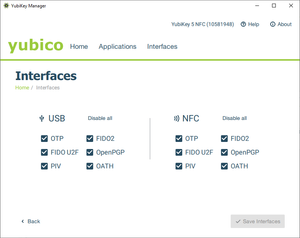
First, do Android support using Fido2 keys on Android? Yes, it does support both using bluetooth, NFC and USB authentication. For reference: https://developers.google.com/identity/fido/android/native-apps But does it mean that it is straight forward to use it in a enterprise environment without hiccups? No, the support lacks many features that both Windows and iOS has supported for long time. If I buy a modern Fido2 with OTP support, will it work straight out of the box for using the USB? No, you need to disable the OTP support first. Here is how you can do that from yubikey manager, this works for Yubikey. Other vendors might have something similar. But for Fido2 keys without OTP support, it should work out of the box for USB-C, like Google titan. Why this happens, dont know. Can we use NFC for Entra ID authentication like we can on Windows and iOS? No. Android does not currently support CTAP2 for NFC, only for USB-C input. CTAP1 (FIDO U2F) supports certificate based authentication, but CTAP supports user verification with PIN and biometrics. Entra ID requires UV (user verification) before accepting login. As far as I know, there is also support for bluetooth. But I dont have any fido2 keys that support bluetooth yet. So why does this matter? With Android you can have shared devices with secure login for multiple users with a single log in for all supported apps, auto log off and many other possibilities. https://learn.microsoft.com/en-us/entra/identity-platform/msal-shared-devices Other sources/discussions: https://www.reddit.com/r/yubikey/comments/1oncuh2/whats_the_point_of_nfc_on_android/ https://www.reddit.com/r/yubikey/comments/13tlzoc/fido2_inconsistent_across_windowsandroid/ https://fidoalliance.org/specifications/687Views3likes13Comments
Option for MDM to place app shortcuts on home screen
We have a great wish to place shortcuts for specific apps on the home screen when the app is installed (or at a later point), but this doesn't seem to be possible. When we discuss this with our MDM provider (SOTI), we are told, it is a Google/Android limitation, and this seems a bit strange to me; is it really not possible to place shortcuts on the home screen to your own liking? I hope this resonates with others - or even better; that I can be corrected, and there is a smart and easy way to achieve this goal. We run all our Android devices as fully managed, if that is relevant.310Views2likes28CommentsIs there any way to disable Google Play Protect (GPP) during QR code enrollment to avoid blocking an MDM app?
I am the developer of Headwind MDM, the open source MDM for Android. In December 2025, many of our users reported the same issue. While installing an MDM app by the QR code method, it is blocked by Play Protect: "This app can request access to sensitive data". A detailed description of the issue is here. As per Play Protect guidelines, this may happen if an app uses sensitive permissions—RECEIVE_SMS, READ_SMS, NOTIFICATION_LISTENER, and ACCESSIBILITY. We removed these permissions in May 2025, and at that time the issue was resolved. Unfortunately the issue re-appeared again in December, and we were unable to determine why Headwind MDM agent is blocked at the enrollment stage. Even removing all permissions from the manifest didn't resolve the issue! Looks like there is an AI which automatically blocks software in an opaque way (by signature or code similarity). Interesting - sideloading and installing the same MDM agent APK on a non-managed device doesn't trigger Google Play block! I'm not talking about the ethics as it was already discussed in another related topic. All I know is that this behavior of Play Protect is a critical threat to our MDM project. Technically, is there a way to bypass Play Protect, for example by adding a parameter in the enrollment QR code? P.S. I already submitted the appeal form. If you have a similar issue, please fill and submit this form, this may speed up the issue resolution.Solved1.2KViews2likes15Comments
Google Play Protect's new policy for custom DPC
Apparently, Google has a new policy that only approved DPCs can be installed through QR Provisioning; otherwise, their installation will be blocked. Link: https://developers.google.com/android/play-protect/warning-dev-guidance#android_enterprise_dpc_enrollment The problem is that I am not able to understand how to apply for DPC approval. I found this page, but still not able to find out where to apply. Your help is appreciated. ThanksSolved792Views2likes7Comments
Need understand some point of this feature - 3.6. Managed configuration management
I have implemented this following feature - 3.6. Managed configuration management. Everything understand but got stuck in point - 3.6.3. The EMM's console must allow IT admins to set wildcards (such as $username$ or %emailAddress%) so that a single configuration for an app such as Gmail can be applied to multiple users. Not understand how to implement this wildcards in one policy for different devices and also let me know for gmail it is supported or not? Thanks in advance.93Views2likes2Comments
GSF ID not generated after device enrollment on Android 15
Hi everyone, We’re facing an issue with devices running Android 15 — after successfully enrolling them in our Android Enterprise setup (Device Owner / Fully Managed mode), the Google Services Framework (GSF) ID is not being generated. This issue did not occur on Android 13 or 14; the GSF ID was available immediately after enrollment. However, on Android 15, the GSF ID remains empty even after waiting and rebooting. We’ve already tried: Factory reset and re-enrollment Checking Google Play Services version Ensuring the device is connected to the internet Waiting for Play Store sync Despite that, the GSF ID is still missing. Could anyone confirm if there’s a known change in Android 15 related to GSF ID generation, or if additional permissions/configuration are required for enterprise-enrolled devices to obtain it? Any guidance or workaround would be greatly appreciated.794Views2likes0Comments