fully managed
84 Topics
Fido2 key and their issues using them on Android
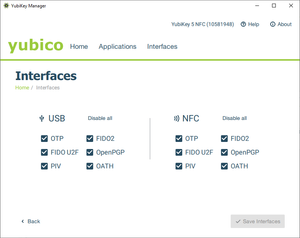
First, do Android support using Fido2 keys on Android? Yes, it does support both using bluetooth, NFC and USB authentication. For reference: https://developers.google.com/identity/fido/android/native-apps But does it mean that it is straight forward to use it in a enterprise environment without hiccups? No, the support lacks many features that both Windows and iOS has supported for long time. If I buy a modern Fido2 with OTP support, will it work straight out of the box for using the USB? No, you need to disable the OTP support first. Here is how you can do that from yubikey manager, this works for Yubikey. Other vendors might have something similar. But for Fido2 keys without OTP support, it should work out of the box for USB-C, like Google titan. Why this happens, dont know. Can we use NFC for Entra ID authentication like we can on Windows and iOS? No. Android does not currently support CTAP2 for NFC, only for USB-C input. CTAP1 (FIDO U2F) supports certificate based authentication, but CTAP supports user verification with PIN and biometrics. Entra ID requires UV (user verification) before accepting login. As far as I know, there is also support for bluetooth. But I dont have any fido2 keys that support bluetooth yet. So why does this matter? With Android you can have shared devices with secure login for multiple users with a single log in for all supported apps, auto log off and many other possibilities. https://learn.microsoft.com/en-us/entra/identity-platform/msal-shared-devices Other sources/discussions: https://www.reddit.com/r/yubikey/comments/1oncuh2/whats_the_point_of_nfc_on_android/ https://www.reddit.com/r/yubikey/comments/13tlzoc/fido2_inconsistent_across_windowsandroid/ https://fidoalliance.org/specifications/687Views3likes13Comments
Play Protect is blocking our DPC app — appeal already submitted, looking for guidance
Hello everyone, We are currently facing an issue where Google Play Protect is blocking our Android application during device provisioning. Context: - It is not distributed via Google Play (but is already published); it is hosted externally and installed during provisioning via QR code. - The app is properly signed, and provisioning works at the system level, but Play Protect blocks the app with the message “App blocked to protect your device.” - This started happening recently on new devices / factory reset devices. We have already submitted the official Play Protect appeal form as recommended in the documentation: The form was completed with all required information (APK, package name, signing certificate, use case, etc.). At this point, we are looking for guidance from the community: - How long does it usually take for the Play Protect appeal form to receive a response or decision? - Is there any additional step or channel recommended for Android Enterprise DPC apps in this situation? Any insights or shared experiences would be greatly appreciated. Thank you in advance for your time and support. Best regardsSolved1.2KViews1like24Comments
PiP Mode Not Working in Lock Task (Kiosk) Mode – Any Official Support or Workaround?
Hi everyone, I’m from ManageEngine MDM, and we’ve observed that Picture-in-Picture (PiP) mode does not work when a device is in Lock Task (Kiosk) mode. In our deployments, the device is configured as Device Owner, and we use DevicePolicyManager#setLockTaskPackages() to enable kiosk mode. However, when an app attempts to enter PiP using enterPictureInPictureMode(), it does not function while Lock Task mode is active. We are receiving multiple customer requests for this capability, particularly for use cases such as: Video conferencing apps running in PiP while a primary kiosk app remains in the foreground Monitoring/streaming apps that require PiP overlay within a controlled kiosk environment Enterprise-dedicated devices that require limited multitasking We would appreciate clarification on the following: Is PiP intentionally restricted in Lock Task mode by design? Is there any supported approach to enable PiP while maintaining kiosk restrictions? Are there any planned API enhancements to support this in enterprise (Device Owner) scenarios? Any insights, guidance, or recommended best practices would be greatly appreciated. Thanks in advance!51Views0likes0Comments
Samsung Smart Switch Not Working After Enrolling Device in Android Management API (Device Owner Mode , new devices not old - samsung A07)
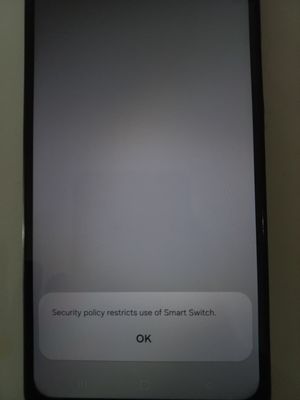
Hello, I have built a device management system using Android Management API. Devices are enrolled in Device Owner mode. After enrolling Samsung devices (especially newer models like Samsung A07), I noticed that Samsung Smart Switch does not work anymore. On older Samsung devices, Smart Switch works even after enrollment. But on newer Samsung devices, Smart Switch does not work once the device is enrolled as Device Owner. I am not using any third-party MDM solutions only Android Management API. My questions: Is Samsung Smart Switch blocked automatically when a device is enrolled in Device Owner mode? Is this expected behavior on newer Samsung devices? Is there any policy configuration that allows Smart Switch to function while still using Device Owner mode? Is this a Samsung restriction or an Android Enterprise restriction? warning screen shot is I would appreciate any clarification on this behavior. Thank you.23Views0likes0Comments
Possible to deploy API commands via Provisioning Profiles in MDM?
Hello, We use WorkspaceONE UEM as our MDM. We sometimes use provisioning profiles to deploy commands to devices run-intents, but I'm not an expert on this subject by any means. I am curious if it is possible to use our MDM to deploy an API command to disable Factory Reset Protection. The command information is here: https://developer.android.com/reference/android/app/admin/FactoryResetProtectionPolicy I realize what a specific question this is. If I can provide more information, please let me know. Thanks in advance!Solved62Views0likes4Comments
Intune Management Capabilities for Samsung Devices
Dear Team, Greetings, I would like to better understand the management capabilities available for Samsung Android devices, with Intune . Specifically, I am looking for clarity on whether these devices can be fully managed through Intune instead of relying on the Samsung Knox management tool, including support for application deployment, patch distribution, firmware updates, and other administrative functions. Any slides reference would be good for my internal discussion ?.79Views0likes6Comments[Day 2] Mission Intune : When Migration Becomes a Mission (Almost) Impossible
Good Morning Everyone 🕵️ Deep within the digital infrastructure, a high-stakes mission is being prepped. Five mobility experts have been deployed to solve a massive puzzle: migrating tens of thousands of smartphones to Microsoft Intune. The Goal: Ensure a fluid, secure, and uninterrupted transition for thousands of users. The Battlefront: A complex landscape filled with legacy policies, mixed configurations, and strict deadlines. It’s a race against the clock where one wrong move could start a domino effect. From scripts to security protocols—nothing is left to chance. Failure is not an option. Following Broadcom’s acquisition of VMware in 2023, the Workspace ONE product is now owned by Omnissa. Broadcom’s commercial strategy, which has influenced its spin-off companies, had become highly aggressive toward all customers. Consequently, we have decided to migrate the management of our Android and iOS tertiary fleet to Microsoft Intune.. While we are familiar with Intune, several limitations should be noted: Reporting: Intune offers basic reporting through Microsoft Endpoint Manager and Power BI integration, but lacks the advanced, customizable dashboards available in Workspace ONE. Deployment Performance: Application and configuration deployments can be slow, with status updates often delayed due to Intune’s reliance on periodic device check-ins rather than real-time communication. iOS Management: Intune provides full functionality only for devices enrolled via Apple Business Manager (ABM). Non-ABM devices have restricted supervision capabilities, limiting advanced configuration and app deployment. Error Handling: Intune does not display granular error codes in its console. Troubleshooting often requires log collection from the device or use of Microsoft Support tools, increasing diagnostic complexity. Conditional Access & Compliance: Intune integrates tightly with Azure AD for conditional access policies, which is a strength, but requires additional configuration and licensing for advanced scenarios. App Protection Policies: Strong for Microsoft 365 apps, but less flexible for third-party apps compared to Workspace ONE. Migration Strategy Overview The project aims to migrate the entire mobile fleet—a few tens of thousands Android and some iOs devices—between September 2023 and December 2024. Cybersecurity requirements mandate a shift from COBO (with personal Google accounts allowed) to COPE, reinforcing corporate control and reducing exposure to security risks. Key Challenges Technical Constraints: Devices incompatible with Android 13 require hardware replacement. For most employees, migration involves full device reset and Intune re-enrollment—a complex, time-consuming process. Security Limitations: Backup tools cannot be authorized, increasing the risk of data loss and user errors. A recurring issue is failure to remove Microsoft Authenticator configurations, creating significant support overhead. Performance Impact: The Samsung Galaxy A32, previously adequate under COBO, performs poorly under COPE, affecting user experience. Status and Strategic Decision By June 2024, progress is far below target. To mitigate operational disruption and support overload, the strategy shifts: forced migrations are discontinued. Migration now occurs only during: Hardware replacement (obsolescence, failure, or breakage) Voluntary device reset This approach prioritizes stability and resource optimization while maintaining compliance with security standards. We’ve been with Intune for almost two years, we make do with it and we are hardly surprised anymore when something doesn’t work. If you have any questions, don't hesitate to reach out via the comments below Kris335Views13likes17Comments
Organization Has Reached Its Usage Limits" Error with 0 Devices - Troubleshooting Guide
I'm developing a custom MDM solution using Google Android Management API. Successfully created enterprise enterprises/LC02x32bm6 with work email domain, but getting: "Can't set up device. Your organization has reached its usage limits." Key Details: Enterprise created successfully via API Enrollment token generated successfully 0 devices currently enrolled Cloud Console shows 0% API quota usage Billing account linked to project GET /api/enterprise/callback → Returns enterpriseName POST /api/enterprise/enrollment-token → Returns enrollment token Device enrollment → ❌ "Usage limits" error Has anyone encountered this "usage limits" error with 0 devices? Android Management API usage is 0%. Any insights appreciated! Happy to share code snippets or API responses if helpful.18Views0likes0CommentsPlay Protect Blocking Custom DPC Apps — How to Get Approval or Alternatives?
Hi everyone, I'm a developer who helps enterprises build custom DPC (Device Policy Controller) Reference Documentation apps to manage Android devices based on their unique requirements. Recently, Play Protect has started blocking the installation of custom DPC apps, even when these apps are signed and used internally. The warning claims the app may pose a risk due to access to sensitive data - even though it's strictly for enterprise use. To make things more difficult: Google is no longer accepting registration of custom DPC apps with Android Enterprise, which limits official distribution and management options. Android Management APIs don’t support all use cases, and also have quote limit. I’ve applied twice to join the Android Enterprise portal to build a SaaS-based device management platform, but both requests were rejected without a clear reason. My questions for the community: Is there any official way to get a custom DPC app approved or whitelisted by Play Protect? Are there any alternative ways to manage Android devices at scale (outside of AMAPI or legacy EMM)? How can new developers or startups gain access to Android Enterprise features when onboarding is currently restricted? Any help, direction, or shared experience would be greatly appreciated. Thanks, KulwinderSolved2KViews6likes18Comments
Issue with Android Enterprise provisioning: afw#identifier invalid and Play Protect blocking app during QR enrollment
We are an organization using a third-party MDM / Device Policy Controller (DPC) solution to manage our Android Enterprise devices. The DPC application is published on Google Play and has been working for managed provisioning. Recently, we started facing issues during Android Enterprise enrollment, and we are seeking guidance on the correct and supported setup. Issues observed 1. afw#identifier enrollment When attempting enrollment using afw#<identifier>, the setup fails with errors such as invalid token, wrong setup, or unable to continue enrollment. This previously worked and now fails consistently, even though the DPC remains published on Google Play. 2. QR code–based provisioning When using QR code provisioning, the device completes initial setup but then Google Play Protect shows “App blocked by Play Protect” for the DPC. The DPC app is Play-approved and not sideloaded by end users. We have already submitted a Play Protect appeal through the official appeal form. 3. Distribution method For QR provisioning, the DPC APK is currently hosted on our own HTTPS server, and the QR includes: Device Admin component SHA-256 signature checksum Secure download location Despite this, Play Protect flags the app after provisioning. Clarifications we are seeking Are there recent changes or requirements for afw#identifier enrollment that could cause invalid token or setup errors? Does Play Protect apply additional checks during QR-based provisioning, even for Play-approved DPC apps? Is using a self-hosted APK download location still supported for Device Owner provisioning, or is Managed Google Play / Zero-Touch enrollment now required? Is there a supported way to allowlist or whitelist a legitimate enterprise DPC app so it is not blocked during provisioning? Are there recommended best practices for third-party MDM providers or enterprise customers to avoid Play Protect blocks during enrollment? We are not attempting to bypass Play Protect or supported security mechanisms. We want to ensure our Android Enterprise setup follows current Google-recommended practices and understand the correct approach going forward. Any guidance or clarification from the community or product experts would be appreciated.188Views0likes4Comments