General discussions
Recently active
Hello Android Enterprise Community,I am experiencing an issue where Google Photos does not appear on the Managed Home Screen (MHS) home screen, despite being correctly configured in the allow-list. I have already contacted both Microsoft Intune Support and Samsung Support, and I would like to share their responses and seek further guidance. EnvironmentDevice: Samsung Galaxy A25 5G (Model: SCG33)OS: Android 15Enrollment: Android Enterprise - Corporate-owned Dedicated Device (Fully Managed, Dedicated)Kiosk Mode: Multi-app kiosk (Managed Home Screen)MDM: Microsoft IntuneSymptomGoogle Photos (com.google.android.apps.photos) does not appear as an icon on the MHS home screen, even though it is correctly listed in the applications allow-list in the app configuration policy.All other apps (Google Maps, LINE WORKS, Samsung Camera, Phone, etc.) are displayed and working correctly on the same MHS configuration.What I have already verifiedGoogle Photos is assigned as Required to All Devices via Ma
Good day Team, We are currently a device reseller in South Africa as well as an MDM provider. We assist customers with MDM, either as a full turnkey solution or on a support basis. We applied to become a Zero Touch Reseller to allow us to upload IMEIs for customers, similar to the way we do for Samsung devices on KME. Our request has been declined twice now. Could you please get some guidance on why we are being declined? Many thanks.David
Hello Android Enterprise Community, I’m excited to join this community and learn from everyone here. I am currently working on AI Enterprise Platform projects involving intelligent device management, IoT, and enterprise software systems. I am interested in exploring how Android Enterprise can support secure device enrollment, enterprise device management, managed applications, and scalable deployments. I would like to learn from the community about: - Android Enterprise enrollment strategies- Device management and security best practices- Integration between Android devices, AI systems, and IoT environments- Enterprise-scale deployment approaches I look forward to connecting with other members, exchanging knowledge, and contributing my experiences. Thank you. Best regards,Nuttida Goedseesuk
Hello,We are an Indian edtech company building an academic platform for coaching institutes and K-12 schools, and we are preparing an Android Management API quota application. Before we submit, I would appreciate a sanity check on whether our deployment model fits the permissible usage policy.Deployment model:- Institutional 1:1 programme. Our contracting customer is the institution; we support it directly.- Approximately 5,000 devices in the first cohort, across a small number of institutions.- Devices are purchased by families rather than the institution, because supplying hardware centrally would put the programme out of reach for most of our families. Families purchase from an institution-approved device list. Devices are enrolled into the institution's managed fleet under its device policy.- Documented guardian consent is obtained per device before enrolment, issued by the institution.- Fully managed (device owner), provisioned by QR from factory reset.- Policy is time-bounded. D
I cant login to my google account for Intune it was deleted
I tried to create a new account but didn’t finish the process on the first day. When I came back the next day to complete it, I received the error message:ERROR_CREATING_USER – Portal user already exists for contactThis means the system has already linked my contact information to a portal user profile, even though I never fully completed the registration. Because of that, I’m unable to create a new account now. The incomplete registration seems to have locked my contact details, leaving me stuck in the process.
Buenas, no puedo agregar o quitar aplicaciones desde https://enterprise.google.com/ al acceder al apartado de aplicaciones e intentar añadir una nueva, esa ventana permanece en blanco. Esto me pasa desde cualquier navegador incluido Chrome, desde cualquier red, con o sin VPN, en distintos equipos.
Good afternoon!I need your assistance. I would like to get a consultation on how to register corporate Samsung devices in Android Zero-touch.
Hello,I have built a device management system using Android Management API. Devices are enrolled in Device Owner mode. After enrolling Samsung devices (especially newer models like Samsung A07), I noticed that Samsung Smart Switch does not work anymore. On older Samsung devices, Smart Switch works even after enrollment. But on newer Samsung devices, Smart Switch does not work once the device is enrolled as Device Owner. I am not using any third-party MDM solutions only Android Management API. My questions: Is Samsung Smart Switch blocked automatically when a device is enrolled in Device Owner mode? Is this expected behavior on newer Samsung devices? Is there any policy configuration that allows Smart Switch to function while still using Device Owner mode?Is this a Samsung restriction or an Android Enterprise restriction?warning screen shot is I would appreciate any clarification on this behavior. Thank you.
Hello everyone,I'm looking for advice from anyone who has successfully joined the Android Enterprise EMM Partner Program.Our organization recently applied for the program but was informed that the application did not meet the required criteria. We understand that Google does not provide detailed feedback regarding application decisions.Afterward, we attempted to start the onboarding process again, but the Partner Portal consistently displays the following message after entering our valid D-U-N-S number:"Something went wrong! If this problem persists, please contact support."We contacted the Android Enterprise Community Team, and they replied that they cannot provide specific feedback or details regarding application decisions.I would appreciate hearing from anyone who has experienced a similar situation.Specifically:Is there a waiting period before submitting another application? Does Google reset the previous onboarding/application record, or should a new application be created? Has a
Hello,4 days ago a security issue has been discovered on linux and this time all posts says it is impacting Android. I’m waiting from Samsung on this (exchange with ETS already) but is there some infos somewhere from Google on this CVE ? the forum AI agent says this CVE is not on the data.CVE-2026-46242https://www.securityweek.com/proof-of-concept-exploit-released-for-linux-bad-epoll-root-access-vulnerability/
Apparently, Google has a new policy that only approved DPCs can be installed through QR Provisioning; otherwise, their installation will be blocked.Link: https://developers.google.com/android/play-protect/warning-dev-guidance#android_enterprise_dpc_enrollment The problem is that I am not able to understand how to apply for DPC approval. I found this page, but still not able to find out where to apply. Your help is appreciated. Thanks
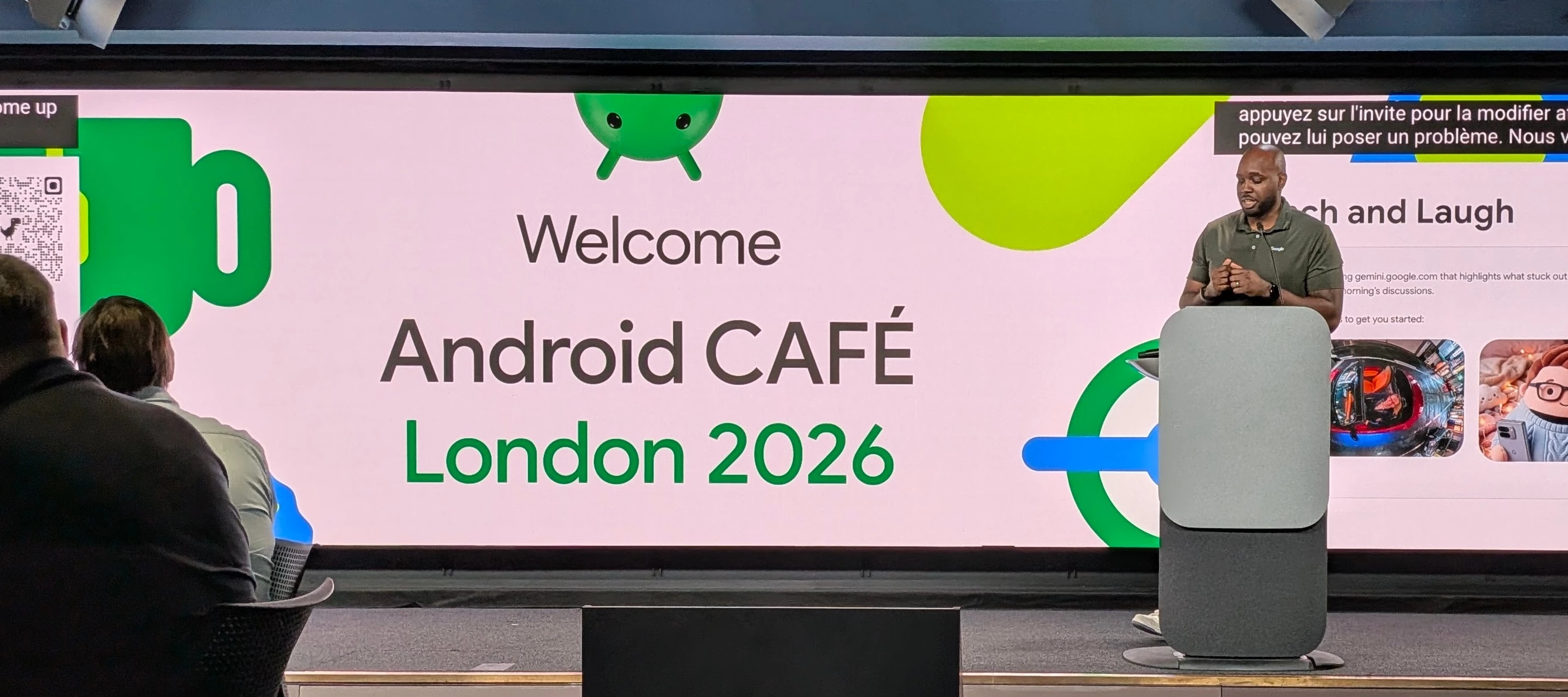
Hey everyone, Last Thursday, Jun 4, 2026, we hosted an in-person gathering for our CAFE members and friends at Google's London office. It was a pleasure to welcome IT admins and owners from both the Android and ChromeOS CAFE communities. We are incredibly grateful to everyone who made the journey to be there; seeing so many familiar and new faces together in one room was truly a highlight. The CAFE (Customer Advisory for Enterprise) is a dedicated private group, for product development and discussion, housed here in the Customer Community. Whilst a lot of the discussions often happen online, several times a year we host an in-person event. The heart of the event was our Product Roundtable Discussions. These sessions provided a unique opportunity for customers to speak directly with our Product Managers and Google team members across an array of enterprise topics, ensuring that your real-world requirements/use cases are heard and help to shape current and potential future product decisi
We are using a custom DPC, and a few enterprise customers with critical use case. Because of their strict Change Management (CM) processes, they need at least 60 to 90 days to test and approve any app update.Currently, we suggested to use Managed Google Play and Postpone policies, but there is a problemHere is the exact problem workflow:Day 1: Customer enrolls devices on V1 and applies a 90-day Postpone policy.Next 90 Days: We release V2, V3, and V4 to production to support our other market customers.Around Day 90: The customer’s IT team thoroughly tests and approves V3 from their Management.Issue : The moment the 90-day postponement expires, Managed Google Play automatically pushes the highest available version(V4)The customer wants V3 to be updated in all devices, but Managed Google Play forces them straight to V4.Since our DPC is already live, we can't stop releasing updates for other Customers.How can we solve this issue?
After upgrading my Google Pixel 9 Pro with a personally-owned work profile enrolled in Intune, all the widgets disappeared from my home and lock screens. This is happening to others as well as evidenced by these posts in other communities:Reddit - r/GooglePixel - Widgets gone after android 17 update Reddit - r/GooglePixel - Android 17 causes widgets to disappeare when using Island Google Support - Pixel Phone Help - widgets disappeared from the home screen Google Support - Pixel Phone Help - Widget issues after update to Android 17 Google Issue Tracker #488125748Additionally, I cannot add the widgets back. The widget picker only shows a limited number of widgets and seems to exclude widgets that display personal information. For example, the Google Calendar or Google Tasks widgets. Other widgets that simply function as a shortcut are unaffected.Widgets in the personal profile can be restored by pausing and unpausing the app for the widget you want. However, after rebooting, the widgets
We have two active Zero-touch configurations in our customer account. However, our reseller can’t see any configuration profile while importing devices through the Motorola Zero-touch portal. since reseller can’t see the configuration profile whenever they import device in Zero touch portal devices automatically associate with the default configuration. How can reseller map the devices with appropriate configuration ID when there are multiple configuration profiles configured on google zero touch
Hi there,New to the Android community!I have a problem where my predecessor created an account for the Google Zero Touch portal and used his company phone number for MFA (only method). The phone number is long gone from the company and can’t be used anymore. Is there any chance to recover the account? I know the email and password!If there is not possibility, what steps do I need to do to set up a new one? We have most resellers listed so I believe I I can ask them to change org id. But what about the currently registered devices?
Howdy all,I’m building an internal MDM tool for our small fleet of 22 Samsung tablets.I think I’ve done everything I need to but I can’t enroll a tablet as I don’t have any quota. The API should be enabled on my cloud project and when I look at the quota page, I only see requests-per0minute quotas. What’s the best course of action to increase the quota for a small deployment? I don’t have a DUNS number so the EMM partner form isn’t applicable. Any help is greatly appreciated!Kind regards, - Luke
When the portal asks us to enter the DUNS Number, it gives an error, even though our DUNS Number is valid. Could you help us resolve this issue?
Hello community, I'm writing this post 'cause I'm facing a strange issue with the lock screen setting on our AE devices managed from Intune.The configuration policy was created by my predecessor years ago, and was configured for lock teh screen after one minute. Everything working and all happy.Then I got the request for create an exception group for that, and everything I tried failed.I tried to change the global policy to 5 mins, but it did not worked, and the maximum lock screen time is still one minute.Also remove the setting at all and left it Not Configured didn't had any effect. Then I tried to disable One Lock. With this I was able to change the system lock screen settings but on Settings - Security and Privacy - More Security Settings - Work Profile Security - Use one lock I cannot set anything longer than one minute. Pretty sure this is coming from somewhere in Intune, but also involving Microsoft and sending them the verbose logs wasn't enough.Did any of you ever e
The Scenario: I am currently testing a deployment where I need to manage Android devices as Company-Owned / Device Owner mode. I have already whitelisted and uploaded the device Serial Numbers (S/N) directly into the Google Admin Console inventory. The constraint: I do not want the end-user to input a corporate Google Account during the initial setup wizard, and I am not using a third-party EMM (like MobileIron, Intune, or VMware Workspace ONE). I want to rely strictly on Google Workspace's native Advanced Mobile Management. The Question: How can I seamlessly trigger the Android Device Policy enrollment right out of the box so that the device recognizes its corporate ownership from the S/N inventory without halting at the Google Account sign-in screen?While researching online, I read that it's possible to trigger this native enrollment using a specific Admin QR Code scanned at the initial setup screen (by tapping the screen 6 times). However, information on how to generate or configu
dear community,some days ago i've Retired a Android COPE (Corporate owned work profile enabled) Device from Intune. In Addition, the Device record where also removed from Samsung Knox Mobile Enrollment Service.I've found out, that on the device itself under Device admins the App "Enrollment Service" is in place and cannot be deactivated.Samsung Support told me already, that "Enrollment Service" is not coming from them, this comes from MDM System.Microsoft Support (what a surprise) had absolutely no idea what im talking about.Now, i want to try my luck here in Android Enterprise community.Did someone else had this Situation, especially with Intune?Google Statement about Retire (RELINQUISH_OWNERSHIP)https://developers.google.com/android/management/deprovision-device#relinquish_ownership_commandIn my point of view, the Device should be fully personal after that action.But when a Device Admin App is still in place which cannot be deactivated, this is then weird.For example: If user, who ca
Hello,We implemented an EMM solution using the Android Management API prior to 2024 and were able to successfully test it in our staging environment.As we are now preparing for a production deployment in 2026, we attempted to create a new EMM enrollment token/EMM instance but encountered a "device quota exceeded" message.We are unsure about the current quota policies, and the process for obtaining additional quota or creating a new EMM instance for production use. Could anyone please advise on the next steps or point us to the appropriate documentation or support channel?Any guidance would be greatly appreciated. Thank you in advance.
Hi all,I'm running a self-hosted Fleet MDM instance for personal/homelab use and I'm trying to enroll my own Android phone using a work profile. I've hit the "your organization has reached its usage limits" error during enrollment, despite having zero devices enrolled.Setup details:- Created a brand new Managed Google Play Accounts Enterprise via the "Sign up for Android only" path- Enterprise was created successfully- Enrollment token generated successfully- 0 devices currently enrolled- Enrollment proceeds normally — gets all the way through the work profile setup and hangs on "Updating phone" — then fails with "Your device can't be set up because your organization has exceeded its usage limits" My use case is purely personal — I'm a hobbyist running Fleet MDM at home to manage my own devices, not building a commercial EMM product. Is there any way to get this quota lifted for a single personal device? Is the AE Compliance team the right contact, and if so, how do I reach them?Tha
I am currently using a Microsoft Intune account to connect with the Managed Google Play Admin Console.Due to a company split, I need to change the domain of my Microsoft account (for example, from linon@abc.com to linon@xyz.com) while keeping the same user account.Since the associated Google account will remain unchanged (linon@abc.com), will I still be able to use the updated Microsoft account (linon@xyz.com) to log in to the Managed Google Play Admin Console?
Already have an account? Login
No account yet? Create an account
Enter your E-mail address. We'll send you an e-mail with instructions to reset your password.